
Scar & Texture Treatments near Green Bay, WI
Scar & Texture Treatments
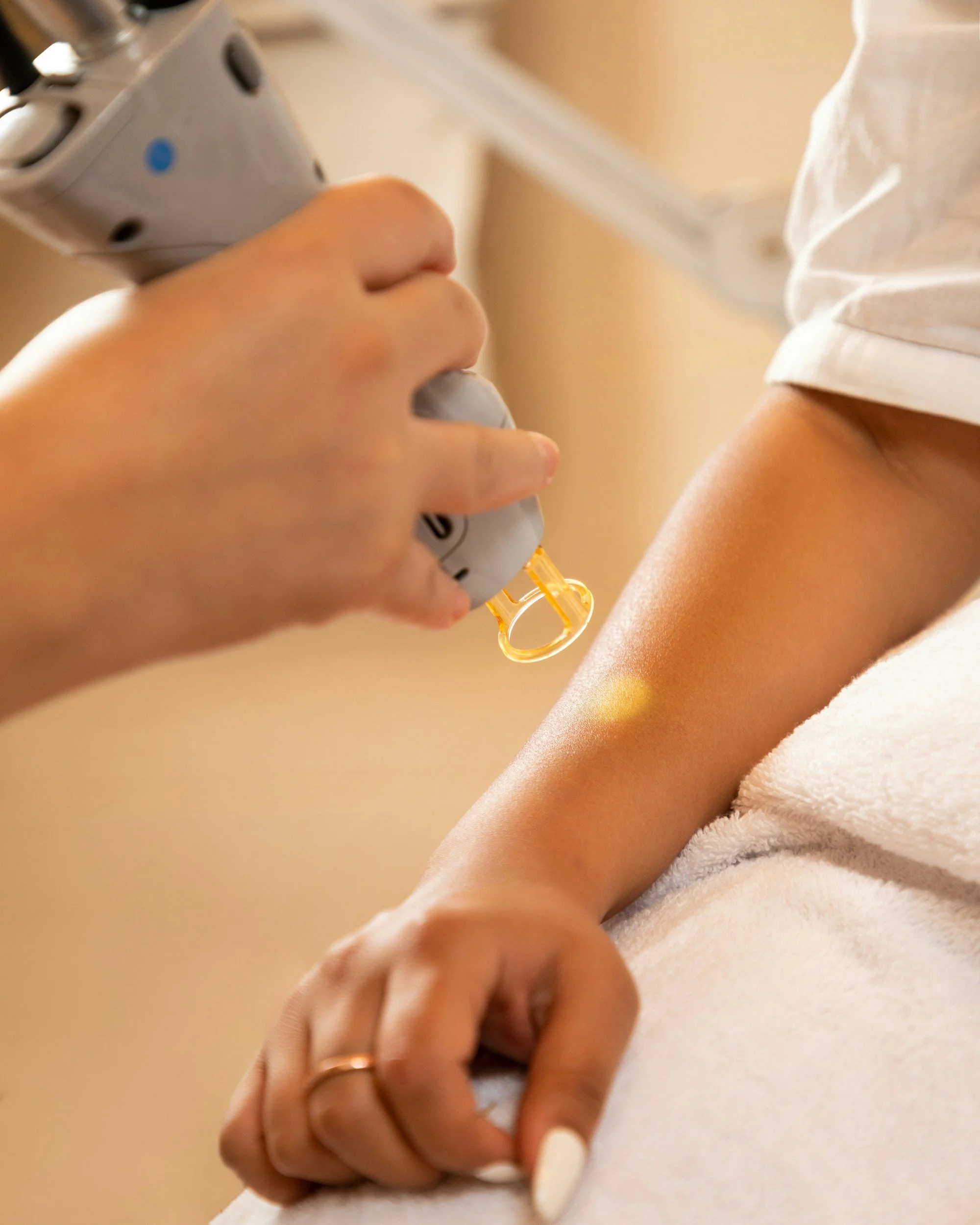
Scars and uneven texture, whether from acne, past surgery, or injury, often stick around long after the original cause has healed. Our laser-based scar and texture treatments work below the skin's surface to soften the appearance of scarring and smooth out texture over a series of sessions, without the downtime of more invasive scar revision options.
Using Fotona's laser technology, we target the deeper layers of skin to stimulate new collagen production, which helps rebuild smoother, more even tissue over time. This approach works well for acne scarring, surgical scars, and general textural concerns like enlarged pores or rough patches.
What We Treat:
Acne scarring & active acne
Rosacea
Stretch marks
-
Acne Scar Resurfacing - $700
Laser Acne Treatment - $250
Rosacea Laser Treatment $350
Stretch Mark Treatment - $500
-
How does laser scar and texture treatment work?
Fotona laser delivers controlled energy to targeted layers of the skin, stimulating your body's natural healing response and encouraging new collagen production. Over time, this can help improve uneven texture, soften the appearance of acne scarring, and support smoother, healthier-looking skin.What skin concerns can this treatment help with?
Scar and texture treatments can be customized for a variety of concerns, including acne scarring, active acne, rosacea, uneven skin texture, and stretch marks. Your provider will evaluate your skin and determine which Fotona protocol is most appropriate for your specific concerns.Will this get rid of my scars completely?
Laser treatment can significantly improve the appearance and texture of scarring, but complete removal cannot be guaranteed. Results vary depending on the type, age, depth, and characteristics of the scar. Your provider will discuss realistic expectations during your consultation.How much downtime should I expect?
Downtime varies depending on the Fotona treatment and protocol selected. Some treatments may involve minimal visible recovery, while more intensive treatments—particularly those targeting acne scarring—may cause redness, swelling, tenderness, and peeling. Your provider will discuss the expected recovery and aftercare specific to your treatment before your session.How many sessions will I need?
Scar and texture improvement typically takes a series of treatments spaced several weeks apart, allowing your skin time to heal and rebuild collagen between sessions. The number and frequency of treatments will depend on your individual skin concerns and goals.Can this be used for active acne or rosacea?
Yes. Certain Fotona protocols can be incorporated into treatment plans for active acne and rosacea. Your provider will assess your skin and determine whether laser treatment is appropriate and which protocol is best suited to your needs.Can this be used for stretch marks?
Yes. Fotona laser can be used to improve the appearance and texture of stretch marks by stimulating collagen and supporting skin remodeling. Multiple treatments are generally recommended for gradual improvement.Can this be combined with other treatments?
Yes. Scar and texture treatments can be incorporated into a broader skin rejuvenation plan and may be combined with other appropriate Fotona protocols or complementary treatments based on your individual needs.Does it hurt?
Most patients experience a warm, prickling, or pinching sensation during treatment. A topical numbing cream may be used for certain protocols to improve comfort. Your provider will discuss what to expect based on the treatment being performed.How many treatments will I need?
Every treatment plan is customized to your individual skin concerns, goals, and the area being treated. There is no one-size-fits-all treatment plan. During your consultation, your provider will create a personalized plan and recommend the number and frequency of treatments that are appropriate for you. -
Before Your Treatment
Avoid intentional tanning and prolonged sun exposure for at least 2 weeks before treatment. Your skin should not be sunburned or significantly tanned on the day of treatment.
Apply broad-spectrum SPF 30+ daily to the treatment area.
Avoid irritating skincare products on the treatment area for several days before your appointment, including retinoids, exfoliating acids, scrubs, and other active ingredients, unless your provider has instructed you to continue them.
Arrive with the treatment area clean and free of makeup, lotions, or other products.
Let your provider know about any active skin irritation, infection, open wounds, cold sores, or other changes affecting the treatment area.
Inform your provider about any medications, prescription skincare products, or recent cosmetic treatments you are using.
If treating a surgical scar, the incision should be fully healed before treatment. Your provider will determine when the scar is appropriate to treat.
After Your Treatment
Expect some degree of redness, warmth, swelling, tenderness, or sensitivity in the treated area. The intensity and duration will depend on your specific treatment.
More intensive resurfacing treatments, particularly acne scar treatments, may result in significant redness and puffiness that can last for several days and potentially up to a week, with peeling as the skin heals.
Keep the treated area clean and follow the specific skincare or post-treatment products recommended by your provider.
Do not pick, peel, scratch, or manually remove any flaking or peeling skin. Allow the skin to shed naturally.
Avoid retinoids, exfoliating acids, scrubs, and other potentially irritating skincare products until your provider advises that your skin has healed sufficiently.
Avoid excessive heat, including saunas, hot tubs, and very hot showers, while the skin is healing.
Avoid strenuous exercise for the period recommended by your provider, particularly while significant redness or swelling is present.
Avoid direct sun exposure and tanning during the healing process.
Apply broad-spectrum SPF 30+ daily once your provider advises that sunscreen can be applied to the treated area. Sun protection is especially important while the skin is healing to reduce the risk of post-inflammatory pigmentation.
Do not schedule other facial treatments, chemical peels, waxing, or other procedures on the treated area until your provider has confirmed that your skin has adequately healed.
When to Contact Us
Contact Wagner Aesthetic Studio if you have concerns about your healing or if your symptoms are worsening rather than gradually improving. Contact us promptly if you develop increasing pain, significant swelling, blistering, drainage, or signs of infection.